Endovascular Aneurysm Repair
Overview
Treatments
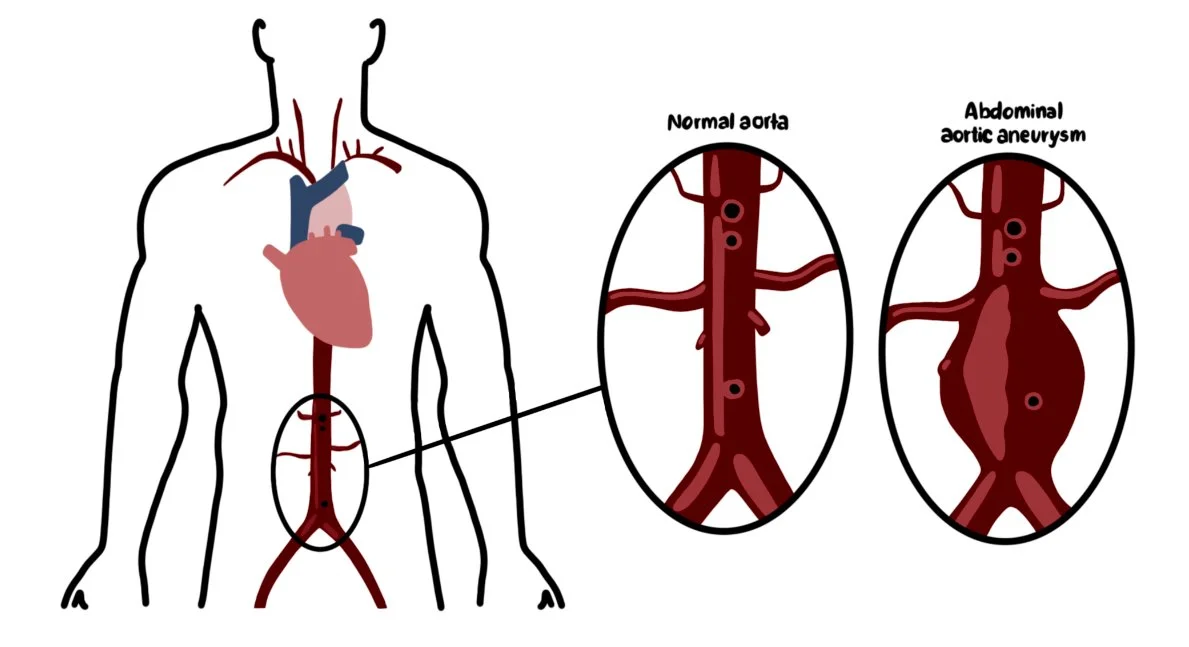
Endovascular Aneurysm Repair (EVAR) is a minimally invasive procedure that can be used to manage abdominal aortic aneurysms. An abdominal aortic aneurysm is a dangerous bulging or swelling in the main artery (aorta) that runs through the abdomen. The aorta is the largest artery that carries blood from your heart to other parts of your body. For abdominal aortic aneurysms, EVAR uses small punctures and sophisticated instruments to repair bulges in blood vessels (aneurysms) located there. Left untreated, this can be a life-threatening condition.
Symptoms

Credit: John Politz, M.D.
Most aneurysms do not cause symptoms and are often found incidentally during imaging for other reasons. However, if symptoms do occur, they may include:
Deep, constant pain in your abdomen or on the side of your abdomen
Back pain
A pulsating feeling near your belly button
A ruptured aneurysm can cause sudden, severe pain, fainting, or even death—this is a medical emergency. Talk to your doctor about your risk factor for aneurysms.
Causes and Risks
Causes
Atherosclerosis (hardening of the arteries)
Genetic factors
Trauma or injury
Infection (rare)
Risk Factors
Age (more common in people over 65)
Males are more at risk than females
Smoking
High blood pressure
High cholesterol
Family history of aneurysms
Diagnosis
To perform EVAR (Endovascular Aneurysm Repair) and determine how severe the diagnosis is, your doctor may recommend:
Abdominal ultrasound (common for screening)
CT scan with contrast (to see size and shape)
MRI
Angiography (to view blood flow and vessels)
These tests help your vascular team assess:
The size of the aneurysm
Its shape and location
Whether it’s suitable for EVAR
A non-invasive test called the ankle brachial index (ABI). This test checks your blood pressure at your ankle and compares it to the blood pressure in your arm.
An arterial Doppler which uses ultrasound to evaluate the blood vessels for plaque, flow, and blockage.
An X-ray called an angiogram. This procedure is used to find out the location of where the plaque has built up in your arteries. It can be done with a CT scan, an MRI, or by puncturing an artery in your groin or wrist and injecting contrast dye.
Role of a Vascular Surgeon
If you experience symptoms or have been diagnosed, ask your primary care provider to refer you to a vascular surgeon. Vascular surgeons can confirm your diagnosis and perform necessary treatments. A vascular surgeon is a specialist in treating these conditions, for EVAR, they are responsible for:
Evaluating if EVAR is the best option
Planning and performing the surgery
Managing follow-up care and imaging
Monitoring for complications over time
They are trained in both open and minimally invasive surgical options and can recommend the best treatment for each patient.
Step-by-step:
Anesthesia – Usually local, regional, or general.
Small incisions – Made in the groin to access the femoral arteries.
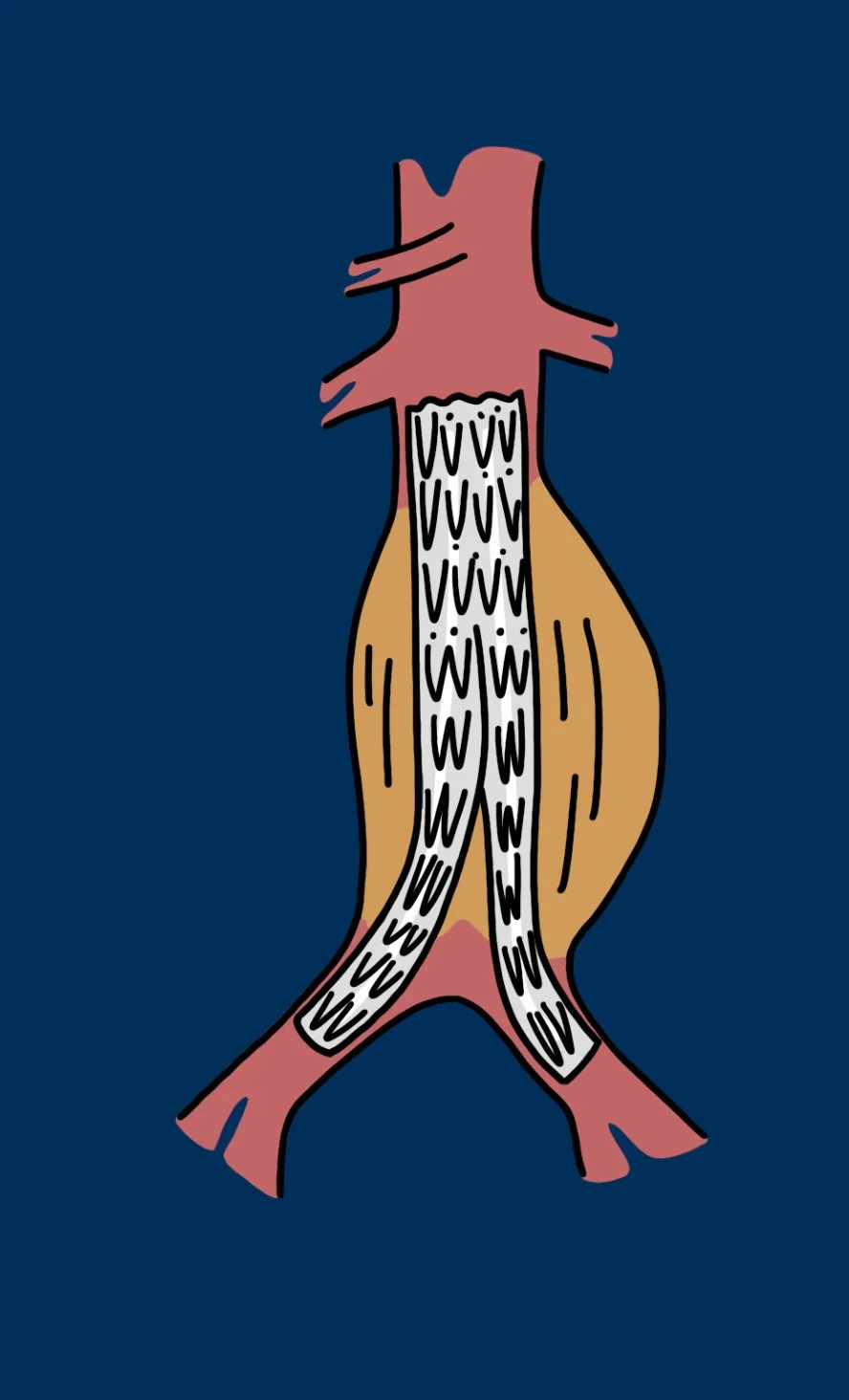
Catheter insertion – A catheter is used to guide a stent graft (a fabric-covered metal mesh tube) through the arteries to the site of the aneurysm.
Stent placement – The stent graft is positioned inside the aorta to reinforce the artery wall and allow blood to flow through safely.
Closing incisions – Incisions are closed and recovery begins.
The EVAR procedure typically takes 1 to 3 hours.
Benefits of EVAR
Minimally invasive (small incisions)
Shorter hospital stay and faster recovery
Lower risk of complications compared to open surgery (in many patients)
Can be done under local anesthesia (ideal for high-risk patients)
What can I expect after treatment?
Hospital Stay
Usually 1 to 3 days
Shorter than open surgery, which may require 7-10 days
At Home
Resume normal activity within 2 to 4 weeks
Avoid heavy lifting for a few weeks
Follow-up imaging is crucial
What you learned